Table of Contents
The Quiet Courage of Opening Up: A Journey Through Trauma and Healing
There's something profoundly lonely about carrying trauma. It lives in the spaces between your words, in the careful way you navigate conversations, in the split-second decisions about what parts of yourself feel safe to share. For so long, I believed that healing meant forgetting that somehow, if I could just push through hard enough, the tender places inside me would eventually calcify into something unbreakable.
I was wrong about almost everything.
The Weight of Silence
Trauma has a way of teaching us that our pain is too much for others to bear. It whispers that our stories are too complicated, too messy, too raw for polite conversation. So we learn to compress ourselves, to offer sanitized versions of our experiences, to smile when asked "How are you?" even when the honest answer might crack something open that we're not ready to tend to.
The silence becomes both armor and prison. It protects us from judgment, from the exhaustion of explanation, from the vulnerability of being truly seen. But it also keeps us isolated in our healing, carrying burdens that were never meant to be shouldered alone.
I spent years perfecting the art of being "fine." Fine became my default setting, my diplomatic response to a world that didn't seem equipped to hold the fullness of human experience. But fine is not a feeling it's a fortress. And fortresses, while protective, can become places where we forget how to let people in.
The Myth of Linear Healing
One of the cruelest myths about trauma recovery is that it follows a neat, upward trajectory. We're sold this narrative of healing as a mountain climb difficult, yes, but with clear milestones and a definitive summit where we plant our flag and declare ourselves "healed."
Real healing looks nothing like this.
Real healing is messier, more circular, more like tending a garden than conquering a peak. Some days you water the seeds of your recovery with tears. Other days, you're surprised by unexpected blooms in places you thought were still too damaged to grow anything beautiful. There are seasons of dormancy that feel like moving backward, and seasons of abundance that catch you off guard with their intensity.
The truth is that healing isn't about returning to who you were before. That person innocent, unbroken, unburdened exists only in memory now. Healing is about integration, about learning to love the person you've become not despite your scars, but because of how they've taught you about resilience, empathy, and the preciousness of peace.
The Courage to Be Known
Opening up about trauma requires a specific kind of bravery the courage to be known. Not just seen, but known. To let someone witness not just your strength, but your struggle. Not just your victories, but your questions that have no easy answers.
This kind of vulnerability can feel terrifying because trauma teaches us that the world is not always safe. It teaches us that people leave, that trust can be shattered, that sometimes the very people who should protect us are the ones who cause harm. Learning to open up again means learning to risk, to trust, to believe that not every person will handle your heart carelessly.
But here's what I've discovered: the right people the ones worth your vulnerability they don't need you to be perfect. They don't need your trauma to be tied up with a neat bow or your healing to be complete before they can love you. They understand that being human means being in process, always becoming, always growing, always learning how to love yourself a little better than you did yesterday.
Finding Your Voice
One of the most profound aspects of trauma recovery is reclaiming your voice not just the ability to speak about what happened, but the deeper knowing of who you are beneath the pain. Trauma has a way of fragmenting our sense of self, leaving us wondering which thoughts are ours and which belong to the experiences that shaped us.
Learning to speak your truth is an act of rebellion against every force that tried to silence you. It's saying, "My story matters. My experience is valid. My healing is worthy of time and attention and tenderness." It's refusing to minimize your pain to make others more comfortable, while also choosing not to let that pain define the entirety of who you are.
Your voice might be shaky at first. It might come out in whispers before it learns to roar. You might stumble over words, struggle to articulate feelings that are bigger than language. This is all part of the process. Your voice, like your healing, needs time to strengthen.
The Sacred Work of Witnessing
Perhaps one of the most beautiful gifts we can offer each other is the gift of witnessing creating space for someone's full story without trying to fix, minimize, or rush them toward resolution. True witnessing means sitting with someone in their pain without needing to rescue them from it, trusting their capacity to heal while offering your steady presence as a reminder that they're not alone.
If you're supporting someone through trauma recovery, know that you don't need to have all the answers. You don't need to take away their pain or offer solutions to problems that can't be solved with advice. Sometimes the most healing thing you can do is simply say, "I believe you. Your pain is real. You don't have to carry this alone."
And if you're the one doing the healing, know that finding people who can witness your story without judgment is not just helpful it's essential. Healing happens in relationship, in the sacred space between two people where truth can be spoken and received with love.
The Paradox of Strength
There's a paradox in trauma recovery that took me years to understand: sometimes the strongest thing you can do is admit you're not okay. Sometimes courage looks like asking for help. Sometimes healing requires falling apart completely before you can rebuild yourself with intention.
We live in a culture that equates strength with stoicism, that treats vulnerability as weakness, that celebrates people who "overcome" their trauma as if pain were simply a matter of willpower. But real strength the kind that sustains you through the long work of healing comes from learning to be gentle with yourself, to honor your limits, to ask for what you need.
Strength is continuing to believe in love after you've been hurt. Strength is choosing to trust again, carefully and wisely, even when you've been betrayed. Strength is getting up each day and deciding to tend to your healing, even when progress feels glacial.
The Long View
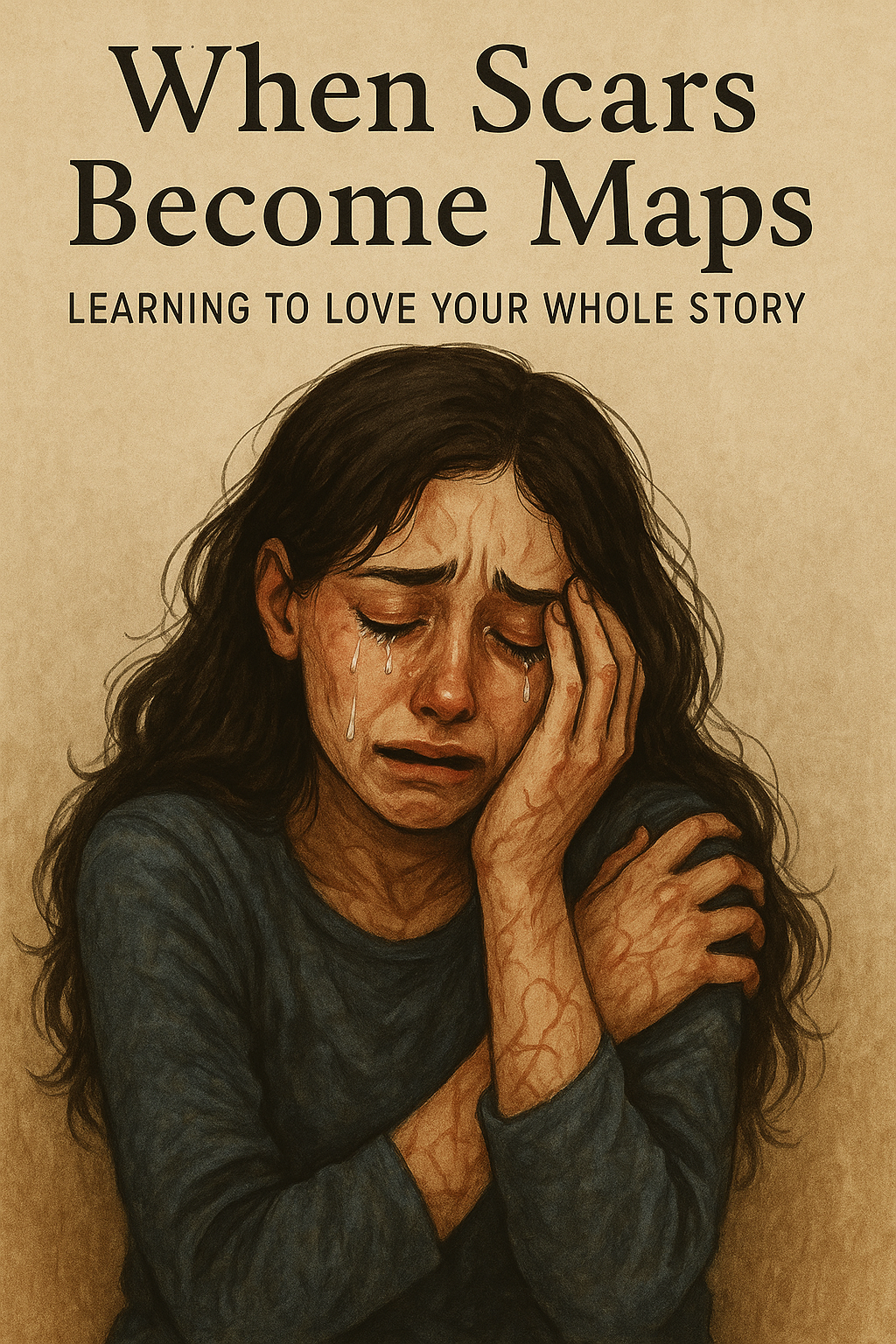
Healing from trauma is not a destination but a way of traveling. It's learning to carry your history without letting it carry you. It's understanding that some wounds leave scars, and that scars can be maps evidence of where you've been, reminders of what you've survived, guides for helping others navigate similar terrain.
On the difficult days and there will be difficult days remember that healing is not about perfection. It's about integration. It's about learning to hold space for all parts of your story, the beautiful and the broken, the light and the shadow. It's about discovering that you are vast enough to contain multitudes, strong enough to carry your past without being defined by it.
Your healing matters. Your story matters. Your willingness to open up, to be vulnerable, to trust again despite the risks this is sacred work. You are not broken, even on the days when you feel shattered. You are human, beautifully and courageously human, learning to love yourself back to wholeness one breath at a time.
And that, perhaps, is the most profound healing of all: not the erasure of pain, but the expansion of your capacity to hold joy alongside sorrow, hope alongside grief, love alongside the tender places that are still learning to trust.
You are enough, exactly as you are, in whatever stage of healing you find yourself. Your journey is yours alone, but you don't have to walk it alone. There is room in this world for your full story, your authentic voice, your perfectly imperfect process of becoming.
The courage to open up is the courage to be fully human. And humanity, in all its messy, complicated, beautiful forms, is always worth celebrating.